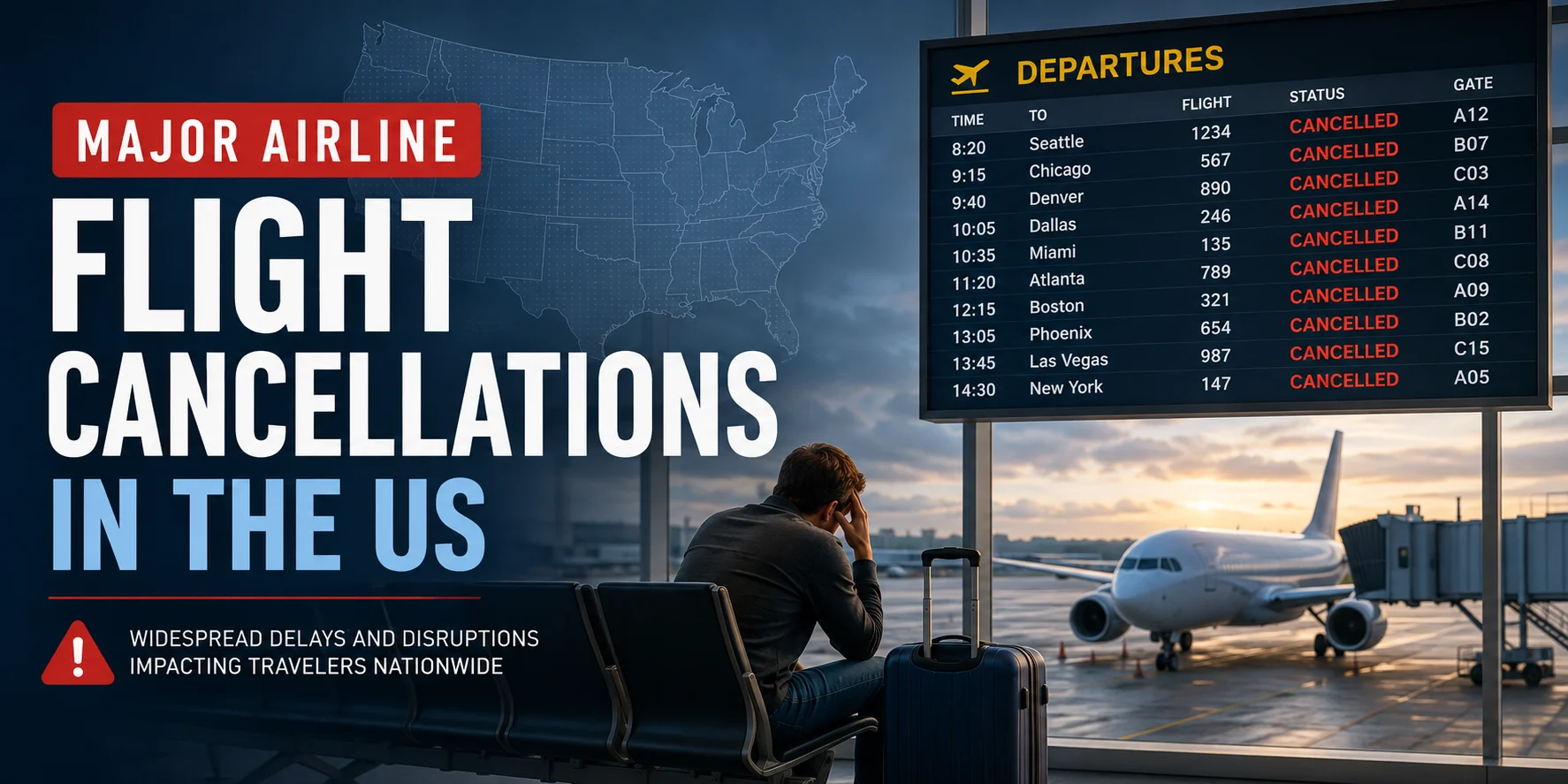

One of the most annoying things for travelers is having flights canceled. When an airline cancels a scheduled flight, the vacation, business meeting or important connection quickly turns into a stressful situation. In recent years, extreme weather, air traffic problems, staffing, aircraft availability and increasing stress on the aviation system have made leading airline cancelations on flights in the US an all-too-common problem. In recent years, major airline flight cancellations in the US have become a common concern due to extreme weather, air traffic challenges, staffing issues, aircraft availability, and increasing pressure on the aviation system.
Travelers can handle unexpected disruptions with less stress if they know the reasons for cancelations, the airlines most often involved and what they can do in case of a cancelation.
Why Are US Major Airlines Canceling So Many Flights?
There’s rarely one reason for flight cancelations. Most disruptions are caused by a combination of operational problems happening at the same time.
1. Dangerous Weather
Weather continues to be one of the top reasons for flight cancelations in the United States. Thunderstorms, hurricanes, snowstorms, heavy rain, high winds and extreme temperatures can affect airport operations. Poor weather can result in: Airport shutdowns Limited runway capacity Aircraft repositioning problem Longer waiting periods Cancelations related to safety Recent U.S. aviation disruptions have been well documented for their strong ties to extreme weather regimes on large airports and airline networks.
2. Air Traffic Control Restrictions
The Federal Aviation Administration (FAA) controls air traffic in the United States. Airports can become too crowded or weather can affect airspace, so the FAA may apply traffic restrictions to maintain safety.
These restrictions can cause:
- Departure delays
- Ground stops
- Flight schedule changes
- Last-minute cancellations
Because U.S. airlines operate interconnected networks, a problem at one airport can create delays and cancellations hundreds of miles away.
3. Aircraft and Crew Availability Problems
Airlines operate thousands of flights daily, and every aircraft and crew member must be in the right location at the right time.
A single delayed aircraft can create a chain reaction:
- A flight arrives late.
- The aircraft misses its next scheduled departure.
- Crew duty limits may be reached.
- The airline may cancel the next flight.
This type of operational issue is one reason why a small disruption can become a nationwide travel problem.
4. Congestion in airports
During busy travel periods Demand for air travel is extremely high during holiday periods, summer vacations and major events. In these periods: Flights are often booked solid. Other flights become scarce. Re-choices of bookings may take longer. More people at the airports.
When cancellations happen during peak seasons, travelers may need to wait longer for replacement flights.
Airlines most affected by flight cancelations in the US
United Airlines
United Airlines operates a large domestic and international network. Weather problems or operational restrictions at major hubs such as Denver, Chicago, Houston, and Newark can create delays and cancellations throughout the system. Passengers connecting through major hubs should always check their flight status before leaving for the airport.
JetBlue Airways
Corp However, JetBlue is prone to cancelations when severe weather hits key operating hubs, particularly along the East Coast. Storms that strike airports in cities like New York and Boston can create schedule disruptions that ripple through many travelers.
Alaska Airlines
Other regional carriers and Alaska Airlines. Cancelations can also affect smaller and regional airlines that often operate flights that are part of larger airline networks. When a regional flight is canceled, it can be hard for passengers to find replacement flight options in smaller markets.
How to Find Out If Your Flight Is Canceled?
If you’re concerned about possible cancelations, the best thing to do is check your flight status early. Passengers must: Check airline’s website Airlines keep their websites updated with the latest flight information, including:
- Delay Cancelations
- Gate modifications
- Options to rebook Airline apps
- Most airlines send notifications in real-time via their apps.
- Look at Airport Information Screens Airport departure boards have information on flight status. (Safety)
- Monitor Weather Conditions If severe weather is forecast for your departure or arrival airport
- check for updates before you travel.
What Happens If Your Flight Is Canceled
A canceled flight doesn’t always mean the end of your journey. If you move fast, you might have a better shot at finding another alternative.
1. Call the Airline immediately Usage:
- Mobile app airline Chat support on website Customer service numbers The airport counters Many passengers are rebooked automatically but it might be worth checking for yourself to see if there is an earlier flight.
2. Search For Other Routes Instead of waiting for the next direct flight, try:
- Various departure times Airports around me Links: No.
3. Your Rights to Refunds and Rebookings Passengers should verify the airline’s policy on:
- Who is eligible for Refund? flight credit Rebooking help Cancelation policies are different for different cancelation reasons and ticket types.
4. Essentials in your carry-on If you have important things with you, it is easier to deal with a canceled flight or an overnight delay. Carry:
- => Medicinal products. Chargers – Travel documents Basic clothes Personal belongings How to Avoid Major Flight Disruptions (For Travelers) You can’t stop cancelations altogether, but with a little planning you can keep the problems to a minimum.
Book a flight earlier If you fly in the morning, you are less likely to get delayed because the planes and crews are already on the ground for the day. DO NOT tighten the connections Allow yourself plenty of time between connecting flights, particularly at busy airports. Choose Flexible Tickets “If things get disrupted, then being able to book flexibly can make it easier to change things. Arrive Early Airports fill fast during major disruptions. Getting there early allows you to make adjustments if something goes wrong.
Conclusion
There are many reasons why a major airline may cancel a flight in the US from bad weather, to FAA restrictions, to operational difficulties. Airlines try to minimize disruptions, but the size and complexity of the nation’s air transport system means delays and cancelations can sometimes affect thousands of travelers. The best way to deal with cancelations is to be informed, check flight updates regularly and know your options and act quickly when changes occur. A little planning and awareness can help travelers better navigate unexpected airline disruptions and get their trips back on track with fewer complications.
Flying to Southern California for a Disney vacation? Before booking your flight, explore our detailed guide about the [closest airport to Disneyland California] and compare nearby airport options, transportation, and travel times.