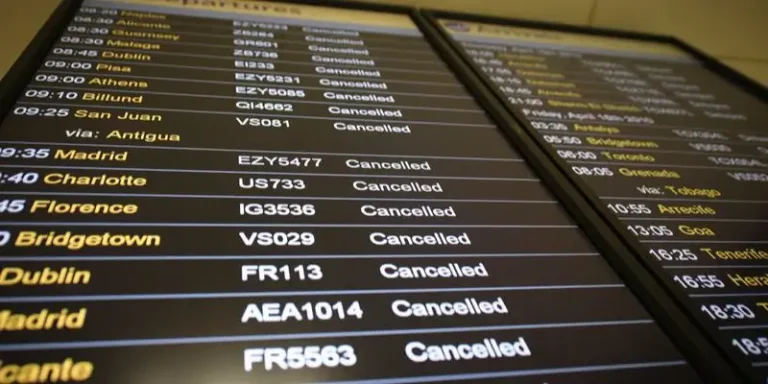
U.S. airline flight cancellations can disrupt business trips, family vacations, connecting flights and international travel plans. A flight that appears on schedule in the morning may be delayed or cancelled later because of severe weather, aircraft maintenance, crew availability, air traffic restrictions or unexpected airport operational problems.
For passengers traveling domestically or internationally from a U.S. airport, understanding how cancelations work and what to do next can make a world of difference. Being aware of how to get flight updates, how to search for alternative flights, and when you might be entitled to a refund could save you money and hours spent hanging around the airport.
It was especially important in November 2026. On November 13, a telecommunications problem affecting FAA air traffic control systems triggered a nationwide ground stop. According to the FAA, approximately 12,462 flights were cancelled that Friday, including 9,082 cancellations by major airlines. Although operations resumed, the agency advised passengers that recovery would take time.
This guide explains the latest U.S. flight cancellation situation, common causes of airline disruptions, affected airport hubs, passenger refund rights and practical ways to arrange alternative travel.
U.S. Flight Cancellations and Delays Today: How to Check Your Flight
If you are searching for If your flight out of the U.S. is canceled or delayed today, check your flight directly before relying on general news about airport disruptions.
Depending on conditions at the airport, the availability of aircraft and restrictions on air traffic, some airlines may be operating, some may be delayed or some may be canceled.
Check out these resources before heading to the airport:
- Flight status: check the official site or app of your airline with your flight number, departure airport or destination on your phone.
- Airport departure boards: Check the official airport website for terminal specific departure info.
- Airline alerts: You can turn on SMS, email and app alerts for any schedule changes.
- DOT consumer information: See U.S. Department of Transportation for a review of passenger refund rights, and airline cancelation commitments.
Important: A flight showing as delayed is not automatically cancelled. Wait for confirmation from your airline before making a separate booking or abandoning your original reservation.
What Causes U.S. Airline Flight Cancellations?
There is no single reason behind U.S. airlines flight cancellations. Airlines, airports and federal aviation authorities must coordinate aircraft movements, airport capacity, weather and passenger operations. If one part of the system is disrupted, the effects can ripple out along many routes.
Here are the most common reasons.
1. Severe Weather/storms
Weather ranks among the top causes of flight disruptions in the United States. Takeoffs and landings can be unsafe in thunderstorms, hurricanes, tornadoes, snowstorms, freezing rain and strong winds.
Weather-related disruptions are particularly significant in:
- Florida, Texas and hurricane season on the Gulf Coast.
- Winter storms across the Northeast and Midwest.
- Thunderstorm seasons in the Southeast and Central United States.
- Heavy snowfall around Chicago, Denver, Boston and New York.
- Strong winds affecting airports in mountainous and coastal regions.
And even if the weather is perfect when you take off, there can be storms on the way or at your destination.
How does the weather affect flights? Airlines may delay flights, reroute aircraft or cancel individual services or reduce their schedules to ensure safe operations.
2. FAA Air Traffic Control Limitations
The Federal Aviation Administration regulates safe movement of aircraft in U.S. airspace. When air traffic is congested or technical problems impact aviation systems, the FAA can issue ground stops, ground delay programs or other traffic restrictions. Such measures can affect flights in several states even when the weather is good locally.
One big example is the national ground stop on Nov. 13, 2026.FAA systems were disrupted by a telecommunications problem causing a temporary nationwide disruption of normal flight operations. The FAA doesn’t cancel airline tickets or make individual airline cancelation decisions. It’s up to the airlines to decide which scheduled flights they have to cancel or delay because of operational restrictions.
3. Mechanical and Maintenance Problems of Aircraft
Airlines must inspect and maintain their aircraft before operating scheduled services. If a mechanical problem is detected the aircraft can be grounded until the problem is fixed.
Here are some common reasons:
- Warning signs for engine or technical.
- Failures of aircraft systems.
- Maintenance inspections. .
- Hydraulic or electric issues.
- Replacement parts needed or engineering inspection.
Safety of passengers is more important than the original schedule. An airline may delay the flight or cancel the service depending on availability of aircraft or substitute another aircraft.
4. Staffing Shortages & Scheduling Problems
You need qualified pilots, cabin crew and ground staff to run commercial flights. If the crew intended to operate the planned service is not available due to illness, scheduling conflicts, duty-time limitations or previous disruptions, the airline may have difficulty in operating its planned service.
The same crew or aircraft that are scheduled for multiple flights can also affect the next flight.
5. Aircraft Arriving Late
One cancelled or delayed flight can affect several other services throughout the day.
For example, an aircraft scheduled to fly from New York to Chicago may arrive late because of bad weather. If that aircraft is scheduled to continue from Chicago to Denver, the second flight may also experience a delay.
This is known as a late-arriving aircraft delay. It is one reason U.S. flight cancellations delays can spread across several airports even when the original problem occurs somewhere else.
6. Congestion at airports and ground handling
Hundreds of flights arrive and depart from busy airports each day. Departure schedules can be affected by limited runway capacity, gate availability, baggage handling problems and ground traffic.
Delays at one major airport can also cause delays at other airports as aircraft can not leave on time for their next destinations.
7. Safety and Misuse Concerns
Security incidents, evacuation of airports, issues with screening equipment and other unforeseen events can all affect the normal functioning of an airport.
Airlines may hold flights, change departure gates or cancel services when an airport cannot operate normally.
U.S. Airport Flight Cancelations: Major Hubs That May Be Impacted?
When U.S. airports have flight cancelations, the impact isn’t confined to the airport where the problem started. The United States has several major aviation hubs that connect domestic and international passengers.
When a major hub experiences bad weather, technical problems or air traffic restrictions, connecting passengers may also face missed connections and schedule changes.
| Airport | City | Airport code | Common disruption considerations |
|---|---|---|---|
| Hartsfield-Jackson Atlanta | Atlanta, Georgia | ATL | Thunderstorms and connecting traffic |
| Dallas/Fort Worth | Dallas–Fort Worth, Texas | DFW | Severe storms and high traffic |
| Chicago O’Hare | Chicago, Illinois | ORD | Snow, ice and thunderstorms |
| Denver International | Denver, Colorado | DEN | Snow, wind and winter weather |
| John F. Kennedy International | New York | JFK | Weather and international traffic |
| Newark Liberty International | Newark, New Jersey | EWR | Airspace congestion and weather |
| Los Angeles International | Los Angeles, California | LAX | Traffic volume and operational restrictions |
| Miami International | Miami, Florida | MIA | Hurricanes and thunderstorms |
| Charlotte Douglas | Charlotte, North Carolina | CLT | Thunderstorms and connecting traffic |
| San Francisco International | San Francisco, California | SFO | Fog, wind and runway capacity |
| Orlando International | Orlando, Florida | MCO | Thunderstorms and tropical weather |
| Seattle-Tacoma International | Seattle, Washington | SEA | Low clouds, rain and winter conditions |
These are important connection points, not a ranking of airports with the highest cancellation rates. Actual disruption levels vary by date, airline and operating conditions.
Why Do Delays at Major Hubs Affect Other U.S. Cities?
The major hubs serve passengers flying between smaller cities and larger domestic or international destinations.
For example:
- A disruption at Atlanta can affect passengers connecting between the Southeast and Western United States.
- Chicago O’Hare delays can affect passengers travelling between the Midwest, East Coast and West Coast.
- Dallas/Fort Worth disruptions can affect connections between Texas, California, Florida and other destinations.
- New York airport delays can affect domestic services as well as international departures.
- Miami disruptions can affect passengers connecting to the Caribbean, Central America and South America.
That’s why US flight cancelations hubs delays searches often spike during major weather events and national aviation disruptions.
US Flight Cancellations Weather Disruptions: What Happens During Severe Weather?
Weather-related cancellations are different from ordinary airline scheduling changes. Airlines must consider conditions at the departure airport, destination airport and along the planned route.
For instance, a passenger travelling from Miami to New York may encounter a disruption even when the weather is sunny in Miami. Severe thunderstorms or strong winds around New York may prevent the aircraft from landing safely.
Here is how different weather conditions can affect U.S. flights.
| Weather condition | Potential flight impact |
|---|---|
| Hurricanes | Airport closures, cancellations and route changes |
| Thunderstorms | Ground stops, holding patterns and departure delays |
| Snowstorms | De-icing, reduced runway capacity and cancellations |
| Freezing rain | Unsafe runway conditions and longer ground operations |
| Dense fog | Reduced arrival and departure capacity |
| Strong winds | Landing restrictions and diversions |
| Tornadoes | Temporary airport and airspace restrictions |
The FAA identifies severe weather as a major cause of U.S. flight delays. During natural disasters, disruptions can extend well beyond the affected airport because flight paths and aircraft schedules may need to change.
Traveler tip: If severe weather is forecast at your destination, check your flight status before leaving home and keep an eye on airline notifications. Do not assume that a flight will operate simply because your departure airport has good weather.
Latest U.S. Airline Cancellation Statistics: What Do the Numbers Show?
Cancellation statistics help passengers understand the scale of airline disruptions, but they should always be read with their reporting period.
The U.S. Department of Transportation publishes monthly Air Travel Consumer Reports containing information about cancellations, delays, on-time performance and other airline operating statistics.
In the October 2026 report, which included August 2026 operating data, reporting U.S. airlines recorded:
| 608,389 Total reported flight records in the table |
| 71.43% On-time flights | 1.86% Cancelled flights |
| 11,313 Cancelled flights | 2,869 Diverted flights |
Source: U.S. DOT October 2026 Air Travel Consumer Report, August 2026 data. Figures refer to the reporting carriers and records covered by the table.
The report also separates delays into categories such as airline-controlled delays, extreme weather, national aviation system problems, security and late-arriving aircraft. This distinction matters because a high number of delayed flights does not necessarily mean an airline has cancelled the same proportion of its services. Passengers can review the latest available figures through the DOT Air Travel Consumer Reports.
What happens when your airline cancels your flight? U.S. Airline Flight Cancelations
If your flight is canceled by the airline, you usually have two main options: Take the airline up on its offer of another flight. If you are eligible under DOT rules, refuse the substitute and ask for a refund. The right choice depends on your travel plans, the reason for cancelation, available alternatives and need to reach your destination.
Many U.S. airlines offer rebooking on another available flight after cancelling a service.If you want to travel, contact the airline through its app, website, airport counter or customer service department.
Ask whether the airline can:
- Put you on its next available flight.
- Offer another route to your destination.
- Arrange an alternative connection.
- Confirm whether there is an earlier departure.
- Find out if you can change to another carrier.
Rebooking on another airline is not guaranteed in every situation. Ask the original airline whether it will endorse your ticket to another carrier before purchasing a separate ticket.
What If Your Connecting Flight Is Cancelled?
Passengers travelling through major U.S. hubs may experience additional problems when their connecting flight is cancelled.
For example, if your itinerary is:
New York (JFK) → Chicago (ORD) → Los Angeles (LAX)
And the Chicago-to-Los Angeles flight is cancelled, contact the airline that issued your ticket. Ask about alternative connections, the next available departure and whether your checked baggage will be transferred.
IIf both flights are on the same ticket, the airline can usually help you make arrangements to complete your journey under its rebooking policy.
If you booked your flights separately, the cover may be more limited.
Flight Cancelation Refund Rules in the U.S. What Are Your Rights in 2026?
One of the most important things U.S. Airline Flight Cancellations passengers should understand is the difference between a ticket refund, rebooking and additional compensation.
Under U.S. Department of Transportation rules, airlines must refund passengers if they cancel a flight and the passenger decides not to fly or to accept an alternative offered by the airline.
That’s true whether a cancelation is due to weather, mechanical issues, crew shortages or something else.
When Are You Eligible for a Full Flight Refund?
You may qualify for a refund if:
- Your airline cancels your flight and you decide not to travel.
- You decline the airline’s offer of a different flight.
- You do not receive a travel voucher or other compensation in lieu of a refund.
- You have a qualifying significant delay or schedule change on your flight and choose not to travel.
The refund typically consists of the unused ticket and any fees for unused services.
What is a Major Change of Flight?
Under DOT rules, some changes are significant changes for refund purposes.
Examples are:
- A domestic flight that leaves three or more hours before its scheduled departure time.
- An international flight departing six or more hours earlier than originally scheduled.
- A change in connecting airports for passengers with disabilities.
- A substitute aircraft that removes an accessibility feature needed by a passenger with a disability.
The DOT also defines other circumstances that may qualify. Passengers should review the official refund guidance for their specific itinerary.
How Long Does an Airline Have to Issue a Refund?
| Original payment method | Refund deadline |
|---|---|
| Credit card | 7 business days |
| Cash, check or other payment methods | 20 calendar days |
The refund must generally be made to the original form of payment.
Important: Accepting an alternative flight or choosing a travel credit instead of a refund can affect your refund eligibility. Review your options before accepting an offer.
Source: U.S. DOT – Refunds for Airline Passengers.
Do Airlines Have to Pay for Hotels and Meals After a Cancellation?
A flight cancellation does not automatically mean an airline must pay for every additional expense.
The airline’s responsibility depends on the reason for the disruption and its published customer service commitments.
| Cancellation situation | What passengers should know |
|---|---|
| Airline-controlled maintenance problem | Check the airline’s commitments for meals, accommodation and rebooking |
| Crew scheduling problem | Ask about applicable airline assistance |
| Severe weather | Hotels and meals are not automatically guaranteed under federal rules |
| FAA ground stop | Check the airline’s rebooking and customer service policies |
| Airport closure | Ask the airline about alternative arrangements and refund eligibility |
The DOT’s Airline Cancellation and Delay Dashboard allows passengers to compare airline commitments for controllable disruptions. Remember that your right to a qualifying ticket refund is separate from whether the airline provides meals, hotel accommodation or other assistance.
How to Handle U.S. Flight Disruptions: Airlines, Delays and Cancellations
When disruptions occur, acting quickly can help you find better alternatives.
If your flight is delayed or canceled you should:
Step 1: Cancelation Check-up
Check the airline’s app, website or official notification. Please check that you have the correct flight number, date and departure airport
Step 2: Contact the Airline Immediately
airline app, customer service or at the airport counter. 3. Major disruptions can cause phone lines and airport counters to become jammed. Use other official channels of communication.
Step 3: Look at What Else Is Out There
If your flight is not available, ask about other departure times, connecting airports and alternate routes.
A traveler flying from New York to Orlando might wish to compare departures from JFK, LaGuardia and Newark, subject to availability and the rules of the airline ticket.
Step 4: Look over your baggage configuration
If you checked bags, ask if they will be transferred to the new flight or if you will have to pick them up.
Step 5: Be Aware of Your Refund Options
Don’t take the new route if you don’t like it. Verify if you qualify for a refund.
Step 6: Have All Your Travel Documents
Keep your original ticket, cancelation notice, boarding pass, booking confirmation and any receipts for additional charges.
These documents can be very useful when filing a complaint or asking for a refund.
If your flight has been canceled, you have the right to rebook your flight
The original airline may provide an alternative flight that doesn’t suit your schedule. You may need to look at other departure times, routes or airlines.
Think about this before you buy another ticket:
- If your original ticket is refundable.
- If the airline has already made a substitute reservation.
- This may require you to cancel your current reservation.
- If your new flight has a different baggage allowance.
- If the replacement route is a new airport transfer.
- If you do buy a separate ticket, whether you could be liable for missed connections.
If you are in hurry you can compare alternative flights and see the conditions of the tickets, saving time and avoiding unnecessary costs in the reservation.
How Terminal-Hub Can Help With Booking Flights After Cancelation
When a flight is canceled, passengers are often left scrambling for alternatives, especially if they have connecting flights, business commitments or international travel plans.
For those travelers looking for help to explore alternative travel arrangements, there is independent flight booking help available at Terminal-Hub.
If your original flight is canceled or your travel plans change, please contact Terminal Hub to discuss:
- New flight bookings: Help exploring alternative flight arrangements.
- Change flight date: Help with understanding options to change travel dates
- Ticket cancelations: Details on ticket cancelation and ticket terms.
- Name corrections: help to understand the airline requirements for passenger name corrections.
- Other options: Check other departure airports, connections and travel choices.
- Ticketing Help: Help with ticketing details, baggage regulations and travel arrangements.
Where a booking is arranged through a partner, the partner handles the ticket issuance and customer payment. Any separate service fee should be explained before the booking is confirmed.
Need Help Finding Another Flight?
If your flight has been canceled, delayed or disrupted please consider alternative travel arrangements before purchasing a new one.
Visit Terminal-Hub for flight booking assistance, ticket changes and cancellation guidance.
Terminal Hub is an independent third-party travel assistance website and is not an official airline, airport or government website. Airline schedules, fares and rebooking options are subject to availability and the applicable airline’s conditions.
How to Reduce the Risk of Flight Disruptions in the United States
Although passengers cannot control weather or airline operations, a few precautions can make travel easier.
- Be sure to book important journeys with plenty of connection time. Allow yourself plenty of time, especially if you’re changing airports or flying internationally.
- Watch the weather forecasts. Check conditions at both the departure and arrival airport.
- Enable airline notifications. Enable flight status alerts in the airline’s official app.
- If you can, try to go earlier. You may have more flexibility if things get disrupted later if you leave earlier.
- Know your ticket terms and conditions. Review the change, cancelation and baggage policies before you buy.
- Keep important items in your carry-on. Pack medication, documents, chargers and other important personal belongings.
- Save booking information. Keep your ticket number, confirmation email and contact number of the airline handy.
The Bottom Line: Expect Cancelations and Delays on U.S. Flights
U.S. Airline Flight Cancellations can happen to travelers at any time of year. Normal airline operations can be disrupted by severe weather, FAA restrictions, aircraft maintenance, crew availability and airport congestion.
Know your refund rights, track your flight status and contact your airline as soon as there’s a disruption. That’s the best course of action. If your original itinerary can no longer be fulfilled, compare alternative travel options before purchasing another ticket.
Whether you’re traveling between major U.S. cities or off to an international destination, being in the know can help you make better decisions and save yourself money on unnecessary travel.