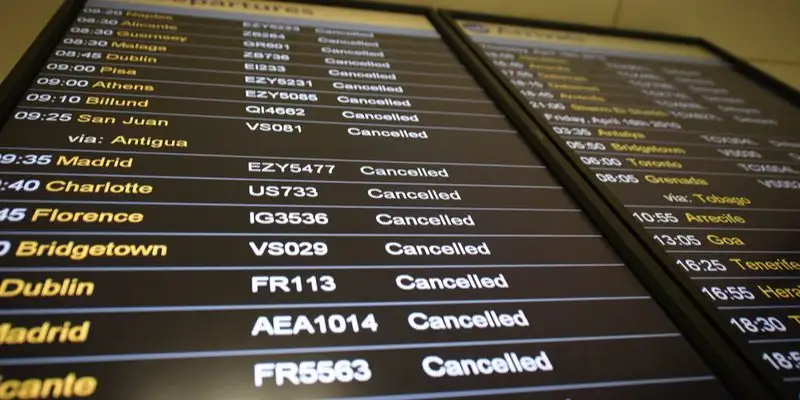

Canceled flights across Europe could disrupt holidays, business trips, visits to family and connecting journeys, leaving passengers scouring for alternative flights and reliable travel information. Bad winter weather, crowded airports, a lack of airline staff, air traffic control restrictions and unforeseen operational problems are some of the factors that can impact flights across European countries. For travelers flying from the United States to Europe, even a cancellation at one European airport can affect connecting flights, return journeys, and onward travel to another destination. Passengers traveling through London, Paris, Amsterdam, Frankfurt, Madrid, Rome, Lisbon, and other major European airports should check their flight status before leaving for the airport. This guide explains Europe flight delays and cancellations, why widespread disruptions happen, what travelers should do when a flight is canceled, how EU passenger rights work, and how US travelers can explore alternative flight arrangements.
If your international itinerary has been disrupted, Terminal-Hub can also help you understand available flight-booking, ticket-change, and rebooking options.
Europe Flight Cancellations: Latest Situation in November 2026
Air travel in Europe can be disrupted at any time of the year. But the reasons and airports impacted depend on the weather, the airline schedules and operational conditions.
And here’s why travelers need to pay attention to their itineraries based on the latest news in November 2026:
- Storm Charles: Portugal and Spain are in for a stormy November. Heavy rain and strong winds disrupted operations and reports on November 13 showed 183 cancelations at Lisbon Airport and 155 at Madrid-Barajas Airport.
- Winter schedule changes: EUROCONTROL said European network traffic averaged 27,649 flights per day during the week of November 2-8, 2026. This was down 1% year-on-year for the same week in 2025, partly reflecting winter capacity cuts announced by several airlines.
- Air Traffic: Control Restrictions Staff and capacity limitations are the main causes of flight delays in Europe. The main causes of en-route ATFM delays in November were air traffic control capacity and staffing, EUROCONTROL said.
- Airport weather delays: Fog, high winds, heavy rain and low visibility can slow down operations at the airport and lead to cancelations or diversions.
These developments do not mean that all European airports or airlines are experiencing mass cancelations. Disruptions can be confined to specific airports, routes or time periods. For travelers searching for flight cancellations in Europe today, it is important to check the airline’s flight-status page and the departure and arrival airport’s official website. A general disruption report cannot confirm whether an individual flight is canceled.
Are There Widespread Flight Cancellations in Europe Today?
There is no single cancellation situation affecting every European country. One airport may continue to function normally, while another is heavily impacted.
When travelers see a number of delayed or canceled flights in different countries, the phrase Europe widespread flight cancelations today often pops up in searches. But a series of unrelated incidents can give the appearance of one single continent-wide disruption.
For example :
- Strong winds could affect flights on approach at airports near the coast.
- Heavy snow can reduce runway capacities at northern and central European airports.
- Air traffic control restrictions may affect many routes.
- Strikes by airline or airport personnel may reduce the number of flights in operation.
- Technical issues may have a temporary impact on an airline’s network.
- Late aircraft can cause delays to subsequent departures.
Passengers who originally departed from a functioning airport can still be affected by a disruption at a major hub airport.
How to Check Europe Flight Cancellations Today
Before traveling, follow these steps:
- Visit your airline’s official website or mobile app.
- Find by flight number or by departure & arrival airports.
- Verify whether the flight is on time, delayed, canceled or diverted.
- See the official flight info at the airport of departure.
- Watch your email, text messages and airline alerts for schedule changes.
- Confirm your onward connection and return flight separately.
For broader European air traffic information, passengers can also consult EUROCONTROL.
Useful resources:
- EUROCONTROL: https://www.eurocontrol.int/
- European Union passenger rights: https://europa.eu/youreurope/citizens/travel/passenger-rights/air/index_en.htm
- US Department of Transportation: https://www.transportation.gov/airconsumer
Why Are Flights Being Canceled Across Europe?
Several things can lead to flight cancelations in Europe. Passengers can use the cause to decide whether to wait for their original service, ask for a different flight or change their travel plans.
1. Bad Weather
Weather is a major cause of flight disruption across Europe. Airlines and airport operators can reduce operations when conditions affect safe aircraft movement, landing, takeoff or ground handling.
Weather disruptions may include:
- Sleet and heavy snow
- Strong winds and storms
- Fog and low visibility
- Storms and lightning
- Heavy rains and flooding
- Airports have iced-over runways and taxiways
These conditions may affect a limited number of flights for a limited period of time, especially during the winter travel season.
2. Air Traffic Control Constraints
Flights between countries all share European airspace. Aircraft may be delayed in taking off or sent on alternate routes if air traffic control centers are short of staff, have capacity limits or technical problems.
This can lead to cascading delays at airports beyond the one where the first restriction occurred.
3. Airline strikes and lack of staff
Flight schedules may be disrupted by strikes by pilots, cabin crew, airport workers, ground handlers or air traffic controllers.
Not all airline flights are canceled when there is a strike. Depending on your location, the duration of the problem, your staff and how you run things, different services will be affected.
Passengers should not assume all flights are affected and should check airline announcements and airport updates.
4. Technical and Operational Issues of Aircraft
Aircraft can be removed from service for inspection, maintenance or unexpected technical problems. If the airline cannot provide a replacement aircraft or crew, it may cancel the scheduled service.
Operational delays can also occur if a plane arrives late on a previous flight, or if crew exceed their allowed hours of duty.
5. Airport Congestion and Runway Restrictions
Busy airports have limited runway, gate, and ground-handling capacity. When one part of the airport operation slows down, the impact can spread to other scheduled services.
Construction, runway maintenance, temporary closures, and restricted airport capacity may also affect flight schedules.
Europe Flight Cancellations Weather: How Snow, Fog and Storms Affect Air Travel
Weather-related disruptions deserve particular attention during autumn and winter. As European airports operate in different climates, the impact of snow, wind and fog differs depending on destination.
Flight Europe Snow Cancelations
Snow can impact aircraft operations by reduced visibility on the runway, slippery surfaces, and increased time that is required for aircraft de-icing.
Airports may require additional time to clear runways and taxiways. Aircraft may also need de-icing before departure to get rid of ice and snow buildup.
Passengers will enjoy:
- Longer wait times for departures
- Missed connections
- Aircraft boarding delayed
- There are fewer flights.
- Canceled arrivals and departures
- Redirecting to other airports
This doesn’t mean that every time it snows there will be flight cancelations. Airports and airlines evaluate snow intensity, runway conditions, visibility, equipment available, and operational safety.
Fog and Low Visibility
Fog can reduce the number of aircraft that an airport can safely handle within a given period. Arrival and departure schedules may be adjusted when visibility drops below operational limits.
Airports such as Amsterdam Schiphol, London Heathrow, Paris Charles de Gaulle and other major European airports may experience delays in periods of heavy fog.
Gusty Winds & Storms
Strong crosswinds and severe storms can impact aircraft approaches, landings and departures. Storms can also cause disruptions leading to flooding, problems with access to airports and temporary restrictions on ground operations.
“When bad weather is coming, passengers should check both their airline and their airport.
Which European Airports Can Be Affected by Flight Cancellations?
Disruptions are not limited to one country. Major international airports can experience delays because of local weather, air traffic restrictions, or problems elsewhere in the European network.
| Airport | City and country | Possible disruption factors |
|---|---|---|
| Heathrow (LHR) | London, UK | Weather, congestion, operational restrictions |
| Charles de Gaulle (CDG) | Paris, France | Weather, strikes, air traffic restrictions |
| Schiphol (AMS) | Amsterdam, Netherlands | Fog, wind, operational capacity |
| Frankfurt (FRA) | Frankfurt, Germany | Winter weather, congestion, staffing |
| Madrid-Barajas (MAD) | Madrid, Spain | Storms, operational restrictions |
| Lisbon (LIS) | Lisbon, Portugal | Strong winds, heavy rainfall |
| Fiumicino (FCO) | Rome, Italy | Weather, airport operations |
| Munich (MUC) | Munich, Germany | Snow, ice, reduced visibility |
| Zurich (ZRH) | Zurich, Switzerland | Snow, fog, winter conditions |
| Brussels (BRU) | Brussels, Belgium | Weather, strikes, staffing |
This is a list of major airports where these types of disruptions can occur, not a report that all of them are currently experiencing cancellations.
Travelers Stranded in Europe Flight Cancellations: What Should You Do?
It can be stressful to be stranded in a foreign country due to a Flight Cancellations, especially if you have a connecting flight, hotel reservation, business meeting, or trip back to the United States.
If your flight is canceled, don’t run out and buy another ticket until you’ve checked what your original airline has to offer.
This is what you gotta do.
Step 1: Confirm the Cancellation
Check the airline’s official flight-status information and look for a cancellation notification.
Keep your original booking confirmation, ticket number, flight details and any messages explaining the disruption.
Step 2: Contact Your Airline
Ask the airline if they have other options. Based on your ticket and the situation, you may be offered:
- Rebooked on next available flight
- Another way – another airport
- Go on another day
- Refund of unused ticket.
- Help during long waiting times
Always make sure the alternative offered covers the whole journey, particularly if your itinerary involves more than one flight.
Step 3: Check other airports
If there is a major disruption at your departure airport, ask if there is a practical alternative at another airport.
For example, travelers in the London area might look at flights from Heathrow, Gatwick or other London area airports. Passengers in the Paris area can compare services available from Charles de Gaulle and Orly.
Remember that a change of airport could mean extra time and money for transportation. Before booking your ground transport, confirm the new departure airport.
Step 4: Confirm your connecting flights
If you booked your whole trip on one reservation, contact the airline about your missed or threatened connection.
If you bought tickets separately, the second airline might treat the onward flight as a separate booking. You can face additional costs if you miss it due to cancelation of the first flight.
Keep all confirmations and receipts of the bookings.
Step 5: Keep Receipts and Records
If you think the airline should be helping you, keep receipts for reasonable meal, hotel and transportation costs.
Reimbursable expenses will be situation-dependent and passenger-rights dependent.
Step 6: Book your return flight from your U.S. home.
If your original return Flight Cancellations, ask the airline to confirm the next available replacement itinerary.
Don’t assume that a flight from another European city will automatically be part of your original ticket. Please confirm the full amended itinerary in writing.
If you need help reviewing alternative routes, ticket changes, or new booking options, Terminal Hub can assist with general flight-booking and travel-support inquiries.
United Airlines Flight Cancellations Europe US: What American Travelers Should Know
Passengers searching for United Airlines flight cancellations Europe US are often concerned about nonstop services between major American cities and European destinations.
United Airlines operates transatlantic services connecting the United States with several European cities, including major destinations such as London, Paris, Frankfurt, Amsterdam, and others, depending on the seasonal schedule.
A cancellation can affect passengers traveling:
- From New York to London
- From Newark to Paris
- From Chicago to Frankfurt
- From Washington, DC, to European destinations
- From San Francisco to London
- From other US cities through European connecting airports
These are examples of international travel markets, not a list of currently canceled United flights.
What Happens if United Airlines Cancels a Flight Between Europe and the USA?
For United cancelations, visit the airline’s official website or app and find your reservation.
Passengers are advised to refer:
- If United has automatically rebooked the reservation.
- If it is the same day as the replacement flight.
- In case the different itinerary involves a connection.
- If the new arrival time affects onward travel.
- If the airline cancels the flight or makes a major change in the flight and you don’t want to fly, will you get a refund?
If your flight to, from, or within the United States is canceled or significantly changed, the applicable US Department of Transportation refund rules require a refund to the original form of payment if you do not accept the alternative offered. European passenger rights may also apply to flights departing from the EU, even if the operating airline is not European.
Passengers should check the rules that apply to their specific journey and not assume that all US-Europe flights offer the same protection.
EU Flight Cancellation Compensation: What Are Your Passenger Rights?
For travelers caught in the storm of Europe flight cancelations, one of the biggest questions is if they can get a refund, a rebooking, help or cash compensation.
EU Regulation EC 261/2004 provides passenger protections for eligible flights.
When is EU261 relevant?
This rule generally states that:
- Flights leaving from an EU airport, no matter the nationality of the airline flying it.
- Flights arriving in the EU from a non-EU country when operated by an EU airline.
- Flights within the EU operated by an EU or non-EU airline.
The rules also extend to Iceland, Norway, and Switzerland under the relevant arrangements.
For example, a flight from Paris to New York operated by a US airline may fall under EU passenger-rights rules because it departs from the EU.
However, a flight from New York to Paris operated by a US airline is generally not covered by EU261 solely because its destination is in the EU. An EU-operated flight from the United States to Paris may qualify.
How Much Compensation Can Passengers Receive?
For qualifying cancellations, the standard EU261 compensation amounts are:
| Flight distance | Potential compensation |
|---|---|
| 1,500 km or less | €250 |
| More than 1,500 km within the EU | €400 |
| Other flights between 1,500 km and 3,500 km | €400 |
| Flights over 3,500 km | €600 |
Compensation is not automatic for every cancellation.
Passengers may not qualify when:
- The cancellation was communicated more than 14 days before departure.
- The airline has offered an alternative flight fulfilling the relevant timing conditions.
- “Exceptional circumstances which could not have been avoided even if all reasonable measures had been taken”.
Severe weather, some air traffic control restrictions and security-related events may be extraordinary circumstances depending on the facts.
Refund or Rebooking: What Can You Choose?
When an eligible flight is canceled, the airline must generally offer passengers a choice between:
1. Ticket refund
You can choose reimbursement of the ticket under the applicable rules.
2. Alternative flight at the earliest opportunity
You can request rerouting to your final destination under comparable transport conditions.
3. Alternative travel at a later date
You can choose rerouting at a later date convenient to you, subject to available seats and the applicable rules.
Once you select one of these options, you generally cannot also demand the other two for the same canceled journey.
Does Bad Weather Mean No Passenger Rights?
No. This is an important distinction. If the cancelation is weather related, the event may be considered to be an extraordinary circumstance and the passengers may not be entitled to the usual EU261 financial compensation.
However, the airline’s obligations to provide a refund or re-routing generally remain. The right to assistance including food, refreshments and accommodation where applicable may also remain. Always check the actual status of your flight.
What If Your Europe Flight Is Delayed Instead of Canceled?
Not every disruption results in a cancellation. A flight may operate several hours later than scheduled.
Passengers are advised to check the scheduled departure time, boarding details and updated arrival time.
If your qualifying flight arrives at its final destination three or more hours late, you may be entitled to compensation under EU261, unless the delay was caused by extraordinary circumstances.
Passengers may also be entitled to meals, refreshments and accommodation where necessary for qualifying long delays.
If the delay is 5 hours or more the passenger is entitled to give up the journey and to get the refund as per the applicable rules.
How Can US Travelers Find Alternative Flights After Europe Cancellations?
When a European flight is canceled, finding another suitable itinerary is often the biggest challenge.
American travelers should compare several factors rather than selecting the first available flight.
Look at Different European Departure Airports
Depending on your destination and where you are, there may be more travel options at alternate airports.
Examples:
- London Heathrow and Gatwick
- Paris Charles de Gaulle and Orly Airport Paris Orly Airport
- Rome Fiumicino and other airports local
- Milan, Linate and Malpensa
- Amsterdam and Brussels
Check to see if transport is available before switching airports.
Compare Connecting Routes
If a nonstop flight is unavailable, consider alternative connections through major international hubs.
Depending on the destination and available schedules, possible connecting points may include London, Amsterdam, Paris, Frankfurt, Munich, Zurich, and Istanbul.
The best option depends on your ticket, travel date, airline agreements, and available seats.
Review the Terms of Your Original Ticket
Before you buy a replacement ticket, see if your original airline can re-route you.
If you buy a separate ticket without checking you may end up double booking or paying for something that won’t be reimbursed.
Consider Changing Your Travel Date
If airport operations are significantly affected by snow, storms, or strikes, a later departure may provide a more practical alternative.
Ask your airline about available changes and any applicable fare differences or charges.
What if my flight to Europe gets canceled? Do I get a refund ?
Yes, depending on the rules and the circumstances of the cancelation.
Under US DOT regulations, airlines are generally required to refund passengers for eligible flights departing from the United States when the airline cancels or makes a significant change to a flight and the passenger does not accept the alternative transportation or other options provided.
Under EU261 passengers can choose to be reimbursed or re-routed on eligible European journeys.
However, if a passenger decides to cancel a flight that is still operating then the cancelation and refund terms and conditions of the fare may apply.
Always distinguish between an airline cancellation and a passenger-requested cancellation.
How Terminal-Hub Can Help With Flight Booking and Ticket Changes
A canceled international flight can create several problems at once. You may need to change your departure date, find a new route, arrange a return flight, or review alternative booking options.
Terminal-Hub provides independent flight-booking assistance and travel support for passengers looking for help with:
- New flight-booking inquiries
- International flight options
- Ticket date and schedule changes
- Name correction inquiries
- Cancellation-related booking assistance
- Alternative route and connection options
- Return-flight booking assistance
If you are traveling from the United States to Europe or returning to the US after a disruption, having your original itinerary available can make it easier to review possible alternatives.
Need Help With a Flight Booking or Change?
If your European flight has been canceled or your travel plans have changed, contact Terminal Hub to discuss available booking and ticket-assistance options.
Have your departure city, destination, preferred travel date, passenger details and existing booking information handy before asking for assistance.
Please note that Terminal-Hub is an independent third-party travel information and booking-assistance service. It is not an official representative of United Airlines or any other airline. Airline rebooking, refunds, and compensation remain subject to the operating airline’s terms and applicable passenger-rights laws.
Final Thoughts
Europe flight cancellations can affect both short-haul journeys within the continent and long-distance flights connecting Europe with the United States. Severe weather, winter snow, air traffic control restrictions, airline staffing problems and operational problems can result in delays and cancelations.
Key steps include checking your flight status, contacting your airline, knowing your rights as a passenger and confirming any new itinerary before making any other travel arrangements.
For U.S. travelers planning to fly to Europe or home after an unexpected disruption, a quick look at alternative flight options can make the next steps easier.Terminal Hub provides independent flight booking and ticket assistance for travelers who require assistance in reviewing their travel options.
Related route internal links
Flights from Miami to London — Explore flights from Miami to London, including international travel options and flight information.