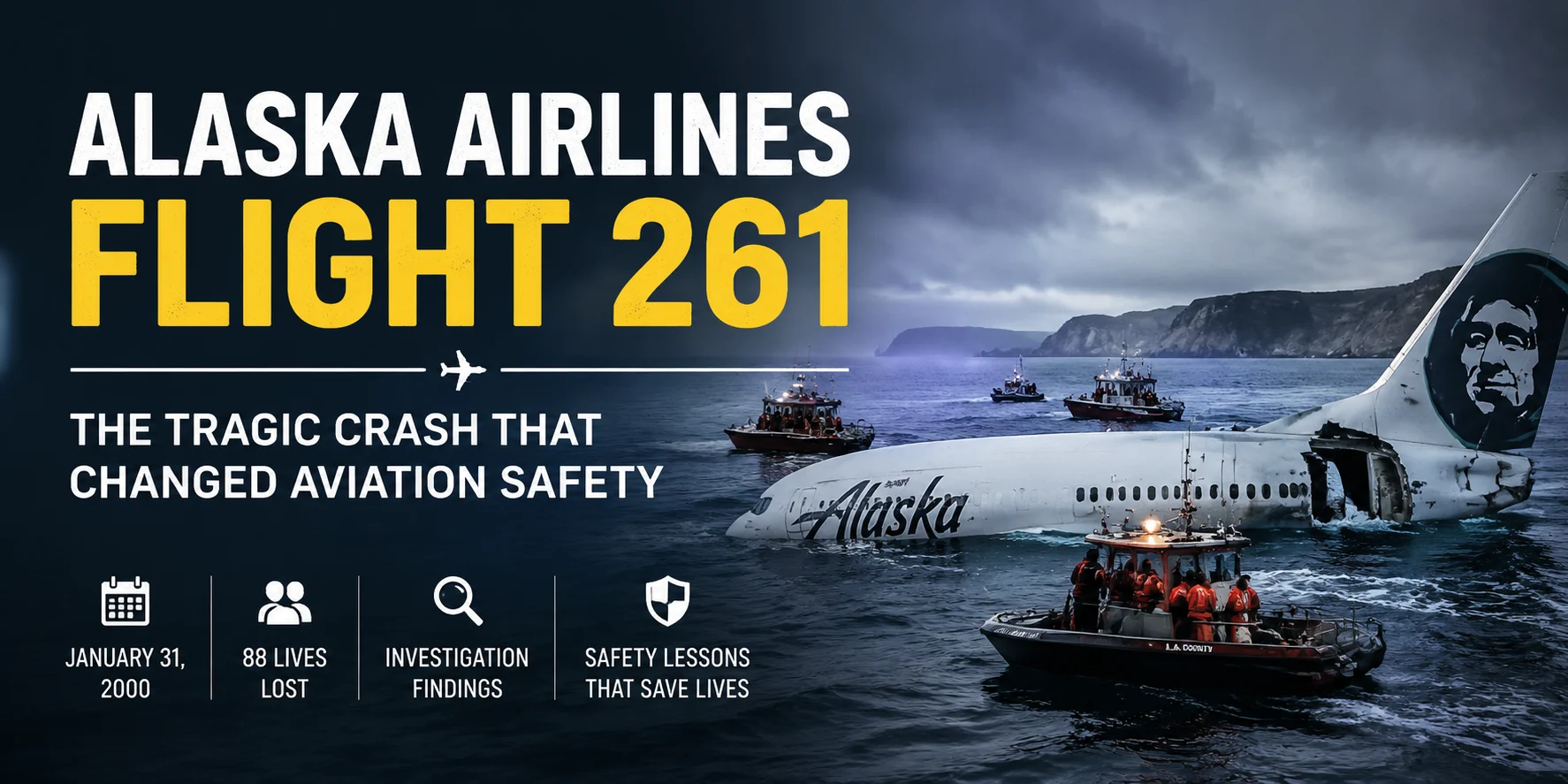

Alaska Airlines Flight 261 is considered one of the most tragic accidents in the history of commercial aviation. On January 31, 2000, Alaska Airlines Flight 261 departed Puerto Vallarta, Mexico, en route to Seattle, Washington, with a planned stop in San Francisco. The aeroplane involved was a McDonnell Douglas MD-83 with 88 personnel aboard, passengers and crew.
Serious technical problems arose en route that impeded the plane’s ability to assume control. The pilots were seasoned and did their best to deal with the problem but the plane went down in the Pacific Ocean off the coast of California. The Alaska 261 tragedy rattled the aviation industry, leading to a full-scale inquiry into aircraft maintenance and safety procedures. The story of Alaska Flight 261 is one of tragedy, but also progress. This tragedy’s lessons resulted in improved aviation safety regulations and maintenance practices across the globe.
What happened on Alaska Airlines flight 261?
Flight 261 took off from Puerto Vallarta International Airport on the day of the tragedy with passengers headed for San Francisco and then on to Seattle. The flight was normal until the aircraft experienced an in-flight malfunction with its horizontal stabiliser system. The horizontal stabiliser system is highly crucial to control the pitch of the aeroplane .
The Alaska Flight 261 pilots promptly set out to understand and control what was happening. They spoke to air traffic controllers and tried various tactics to get control of the jet back. Their calmness, response and decision making in the face of the situation demonstrated their professionalism and dedication.”
Unfortunately, the mechanical trouble grew worse. The jet went into a steep dive and crashed into the Pacific Ocean near Anacapa Island, Calif. All 88 people aboard Alaska 261 were dead.
Alaska 261 Airliner Crash Enquiry
The National Transportation Safety Board (NTSB) conducted a full investigation into the crash of Alaska Airlines Flight 261 following the tragedy.
Investigators examined the plane’s wreckage, maintenance history, flight data and operational routines. The incident was caused by the breakdown of the horizontal stabiliser trim mechanism, they found. A vital part, a jackscrew assembly, was badly worn, preventing the aircraft from maintaining normal control.
The study revealed that the cause of failure was a lubricant deficiency and maintenance difficulties. The Alaska 261 crash investigation found that tight maintenance schedules must be followed and key parts of the aircraft inspected thoroughly.
Alaska Flight 261 Passengers and Crew
Alaska Airlines Flight 261 was carrying 88 persons including:
- 83 people.
- 5 members of the crew.
The passengers came from all walks of life and were travelling on separate personal and professional excursions. The tragedy affected many families, friends and communities who lost loved ones.
The pilots of Alaska Flight 261 were veteran pros who did all they could to keep the jet and themselves safe. What they did in the emergency is still a huge part of the history of the flight.”
How Alaska Airlines Flight 261 Changed Aviation Safety Forever
The Alaska Airlines 261 event was one of the main turning points in aviation safety. Airlines and the aviation authorities reviewed the aircraft maintenance procedures, specifically the systems that operated the jet in flight, after the incident.
Some enhancements were introduced such as :
- Inspection of key elements of aircraft more often
- Better maintenance and lubrication practices
- Improved tracking of mechanical wear
- Further safety checks of related aircraft systems
- Lessons acquired from the Alaska Flight 261 incident helped develop aviation safety programmes and prevent future failures of a similar sort.
Why Alaska Airlines Flight 261 Remains in Our Memory
Over 20 years later, aviation professionals still study Alaska Airlines Flight 261, and the public remembers. The disaster demonstrated the importance of adequate maintenance, safety management and attention to mechanical details in commercial flying. Disaster of Alaska 261 was a reminder that aviation safety relies on the interplay of aircraft design, maintenance personnel, pilots, and regulatory agencies.
The disaster was a tragic heartbreak but it led to reforms that made air travel safer for millions of travelers all over the world.
Shortly
The crash of Alaska Airlines Flight 261 represents a tragic event and a pivotal moment in the history of aviation safety. The incident highlights the need for good safety systems, regular inspections and proper maintenance. The victims of Alaska Airlines Flight 261 are gone for good. The lessons of that tragedy continue to inform aviation procedures today. Flight 261 taught us that future travelers will benefit from improving air safety. The Flight 261 legacy reminds us that every enhancement in air safety is for the benefit of the next generation of travelers.