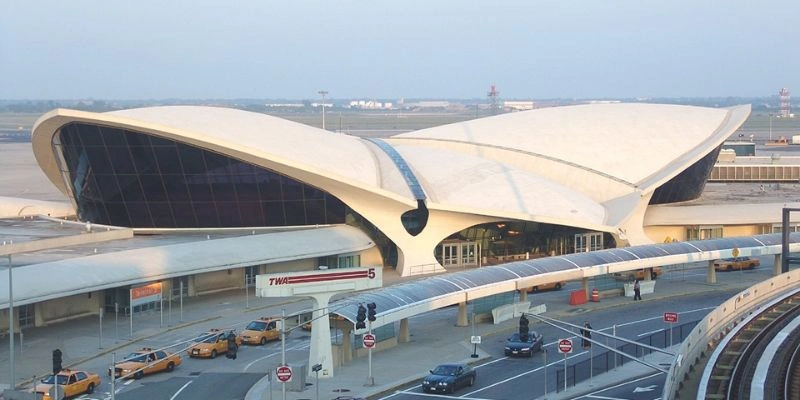

Exciting, yes, but knowing where to go, which terminal to use and how to check your flight status can make all the difference when traveling through New York. John F. Kennedy International Airport (JFK) is one of New York City’s and the larger metropolitan area’s primary international gateways. It links travelers to destinations across the U.S. and around the world.
Whether you are catching an international flight, meeting an arriving passenger, changing planes, or planning ground transportation, this guide explains the essential information you need before visiting JFK.
This guide covers the airport’s location and address, terminals, airline services, flight schedules, arrivals and departures, parking, transportation, security, baggage, passenger facilities, and frequently asked questions. It also explains where to verify information when airport operations change.
John F. Kennedy International Airport: Essential Information
John F. Kennedy International Airport is a public commercial airport operated by the Port Authority of New York and New Jersey. Its airport code is JFK, its ICAO code is KJFK, and it serves the New York metropolitan area.
| Airport detail | Information |
|---|---|
| Official name | John F. Kennedy International Airport |
| Common name | JFK Airport |
| IATA airport code | JFK |
| ICAO airport code | KJFK |
| Location | Jamaica, Queens, New York City, New York, USA |
| Address | John F. Kennedy International Airport, Queens, NY 11430, USA |
| Airport operator | Port Authority of New York and New Jersey |
| Airport type | Public international airport |
| Former name | New York International Airport, commonly known as Idlewild Airport |
| Opened | July 1, 1948 |
| Passenger terminals | 1, 4, 5, 7 and 8 |
| Runways | Four |
| Primary transportation | AirTrain, subway, Long Island Rail Road, buses, taxis and rideshare services |
| Official airport website | https://www.jfkairport.com/ |
JFK covers approximately 5,200 acres and is located on the southwestern shore of Long Island, beside Jamaica Bay. Its large terminal complex handles domestic and international passengers, airline operations, cargo traffic, and connecting journeys.
For the latest operational information, use the official JFK Airport website.
Where Is John F. Kennedy International Airport Located?
Where is John F. Kennedy International Airport located? The airport is in the Jamaica area of Queens, a borough of New York City. It is on the south western shore of Long Island near Jamaica Bay and to the south east of central Manhattan.
Its position at the New York City John F. Kennedy International Airport makes it an important gateway for visitors traveling to Manhattan, Brooklyn, Queens, Long Island and other parts of the metropolitan area.
JFK is about 16 miles southeast of Midtown Manhattan, but the actual distance and travel time vary based on your destination and route.
Visitors should take care to differentiate JFK from the other big airports that serve New York:
- JFK Airport A major international travel hub, it is located in Queens.
- LaGuardia Airport (LGA) LaGuardia is in Queens and serves a number of domestic flights and some international.
- Newark Liberty International Airport (EWR) New Jersey, serving the greater New York metropolitan area.
These airports are not substitutes for each other. Always confirm the airport code on your ticket before leaving for the airport.
Getting to and from John F. Kennedy International Airport
John F. Kennedy International Airport is often called:
11430 USA Queens, NY John F. Kennedy International Airport
If you are driving, search for your airline’s specific JFK terminal and not just the airport’s general address. Pickup areas and parking facilities and terminal access roads may vary.
Drivers can reach the airport from the JFK Expressway, and connecting highways, including Interstate 678. Traffic can be heavy during peak travel times and construction work.
If someone is dropping you off, share your terminal number and airline in advance. If you are collecting a passenger, confirm the arrival terminal and use the designated pickup area or waiting lot.
History of John F. Kennedy International Airport
JFK began operations on July 1, 1948, under the name New York International Airport. It became widely known as Idlewild Airport, a name associated with the golf course and surrounding area where the airport was developed.
The airport became a major international gateway with the expansion of commercial aviation after the Second World War.New terminals, airline facilities, cargo operations and longer runways handled the increasing passenger and aircraft traffic.
In December 1963, following the assassination of President John F. Kennedy, the airport was renamed John F. Kennedy International Airport in his honor.
Over the following decades, JFK became a major hub for major US airlines and a destination for international carriers. Its history also includes landmark aviation developments, including the arrival of scheduled supersonic Concorde service in 1977 and the introduction of the AirTrain JFK system, in 2003.
The airport is undergoing a major redevelopment to improve passenger facilities, transportation connections, terminal capacity and the overall travel experience.
JFK Airport Terminals – What Terminal do you need?
One of the first things you need to know about John F. Kennedy International Airport (JFK) is that it has several separate passenger terminals. The currently listed terminals are 1, 4, 5, 7, and 8.
Do not assume that all terminals are connected airside or that you can walk directly between them after passing security. Moving between terminals may require the AirTrain and additional security screening, depending on your itinerary.
Terminal 1
Terminal 1 serves a range of international airlines. Carriers listed by the airport include Air France, Air China, Lufthansa, Turkish Airlines, Korean Air, Philippine Airlines, SWISS, and others.
Passengers can access check-in facilities, restaurants, retail outlets, duty-free shopping, lounges, and other travel services.
If you’re flying out of Terminal 1, please check the airline’s current check-in location and departure information before coming.
Terminal 4
Terminal 4 is a major international terminal with a broad range of airlines and passenger facilities. Airlines operating here include Delta Air Lines, Aeromexico, Air India, Avianca, Emirates, KLM, LATAM, Singapore Airlines, Virgin Atlantic, and others.
Facilities include airline check-in areas, security checkpoints, dining, shopping, lounges, and international passenger processing.
Because many airlines operate from Terminal 4, passengers should verify their airline and flight number rather than assuming all international flights use the same terminal.
Travelers departing from or connecting through Terminal 4 can explore the Capital One Lounge at JFK for details about its location, access requirements, amenities, and other lounge options. Before visiting, confirm your departure terminal and check the latest lounge access policies to ensure you are eligible for entry.
Terminal 5
Terminal 5 is the flagship terminal for JetBlue and also serves Cape Air and Sun Country Airlines.
The terminal offers dining, shops, passenger amenities, charging facilities, and access to the AirTrain. The airport has also announced upgrades to the Terminal 5 passenger experience, so travelers should check current construction notices and pickup arrangements before traveling.
International arrivals may be handled differently depending on the airline, flight, and arrival time. Follow the instructions issued for your particular flight.
Terminal 7
Terminal 7 serves several international and other carriers. Airlines listed by JFK include Aer Lingus, Air Canada, All Nippon Airways (ANA), Condor, Frontier, Icelandair, Kuwait Airways, Norse Atlantic Airways, and others. So, Terminal assignments and redevelopment plans can change, so confirm the operating terminal directly with your airline before departing for JFK.
Terminal 8
JFK Terminal 8 is a major terminal for American Airlines and its partner airlines. Carriers listed by the airport include American Airlines, Alaska Airlines, British Airways, Cathay Pacific, Finnair, Hawaiian Airlines, Iberia, Japan Airlines, Qatar Airways, and others.
The terminal has check-in counters, security screening, dining, shopping, lounges, and facilities for international arrivals.
Are JFK Terminals Connected?
The AirTrain connects the airport’s passenger terminals with airport parking, rental car facilities and public transportation links. A terminal transfer, however, need not be a simple walk.
If you’re connecting flights, check whether your itinerary requires you to collect baggage, clear customs and immigration, change terminals or go through security again. Give yourself more time for this.
For the most current terminal and airline information, consult JFK’s official terminal directory.
Airlines Operating at John F. Kennedy International Airport
JFK serves a large network of US and international airlines. The official airport airline directory lists more than 70 operating airlines, although routes, seasonal services, and terminal assignments can change.
Examples include:
| Airline | Listed terminal |
|---|---|
| American Airlines | Terminal 8 |
| Alaska Airlines | Terminal 8 |
| JetBlue Airways | Terminal 5 Some international arrivals may use Terminal 4 |
| Delta Air Lines | Terminal 4 |
| Air France | Terminal 1 |
| Lufthansa | Terminal 1 |
| Turkish Airlines | Terminal 1 |
| Air India | Terminal 4 |
| Virgin Atlantic | Terminal 4 |
| Emirates | Terminal 4 |
| Qatar Airways | Terminal 8 |
| British Airways | Terminal 8 |
| Japan Airlines | Terminal 8 |
| Philippine Airlines | Terminal 1 |
| Air Canada | Terminal 7 |
This is a practical selection, not a complete or permanent list. A codeshare flight may be sold by one airline but operated by another carrier, and that distinction can affect check-in and terminal details.
Before traveling, confirm the operating airline, terminal, departure time, baggage rules, and check-in deadline using your booking confirmation or the airline’s official website.
John F. Kennedy International Airport Flight Schedules
Travelers searching for John F. Kennedy International Airport flight schedules generally need one of three things: the status of a departing flight, the estimated arrival of an incoming flight, or information about a connecting journey.
Depending on weather, air traffic restrictions, maintenance, operational issues and airline decisions, flight schedules are subject to change. A published departure time is not a guarantee that a flight will leave at that exact time.
To check a flight:
- Open the official JFK Airport flight information page.
- Choose Arrivals or Departures.
- Please enter the airline, flight number, destination or origin and date as required.
- Review the status and terminal information that is displayed.
- Check the airline’s own flight-tracker for the latest operational updates.
Use the official JFK flight information page.
If the airport’s live data is temporarily unavailable, use the operating airline’s website or app. Do not rely on an old search result or a third-party timetable as proof that a flight is on time.
John F. Kennedy International Airport New York Departures
Passengers looking for John F. Kennedy International Airport New York departures should verify their flight before leaving home.
Departure information normally includes the flight number, destination, scheduled departure time, estimated or actual departure status, and terminal or gate information when available.
What time should you arrive at JFK?
How early you need to get there depends on your airline, your destination, how you’re checking in, your baggage and what the airport is doing that day. Many airlines recommend arriving roughly two hours prior to domestic departures and three hours prior to international departures, but the airline’s own guidance trumps.
Allow more time for checking bags, getting travel papers, asking for help, or if it is a busy time to travel.
JFK departure check list
- Check your flight number and gate.
- Check with your airline online to see if this is permitted.
- Check baggage allowance and prohibited items
- Keep your identification and necessary travel documents with you.
- See live traffic and transit updates.
- Review security screening requirements.
- Check the departure board for gate changes.
A terminal number is not the same as a gate number. Gates can change, so check the airport monitors and airline notifications after entering the terminal.
New York John F. Kennedy International Airport Arrivals
The new york john f kennedy international airport arrivals process depends on whether a passenger is arriving on a domestic or international flight.
Domestic arrivals
Passengers arriving on domestic flights generally follow signs to baggage claim, ground transportation, and the terminal exit. Baggage delivery times vary by airline and airport conditions.
If you are meeting a passenger, check the actual flight status rather than driving to the airport based only on its scheduled arrival time.
International arrivals
International passengers generally follow signs for passport control or immigration, baggage claim, and customs. Processing times vary according to the number of arriving passengers, staffing, document checks, and other operational factors.
Eligible travelers may be able to use programs such as Global Entry or Mobile Passport Control, subject to current US Customs and Border Protection rules.
Passengers connecting to another flight should confirm whether they must collect and recheck their baggage, clear immigration, change terminals, and pass through security again.
Where should you meet arriving passengers?
Before leaving to collect someone:
- Confirm the flight number and arrival date.
- Check the arrival status now
- Check the terminal.
- Agree on a pick up spot that is allowed by the airport rules.
- Allow time for immigration and baggage collection if applicable.
See JFK’s official arrivals guide for live details.
Getting to and From JFK Airport
JFK offers several transportation options for passengers heading to Manhattan, other boros of New York City, Long Island and beyond the city.
AirTrain JFK
AirTrain JFK connects passenger terminals with airport parking areas, the rental car center, and public transportation stations. It links passengers to subway and Long Island Rail Road connections through the Howard Beach and Jamaica stations.
Check the official AirTrain website for current service information, fares, and any operating changes before traveling.
Subway
The subway is a public transportation option for passengers who connect to the appropriate subway service through AirTrain. The best way depends on where you are going and which station you use.
Allow extra time for travel if carrying heavy luggage or changing services.
Long Island Railroad
Rail service to points in New York City and Long Island is provided by the Long Island Rail Road from Jamaica Station. Passengers should check current timetables, fares, and onward connections.
Taxis and rideshare services
Licensed taxis operate from designated airport pickup areas. Rideshare services such as Uber and Lyft use designated pickup locations, which may change during construction.
JFK’s official transportation page has warned about construction-related delays affecting vehicle drop-offs and pickups. Check the current instructions before requesting a ride.
Only use authorized transportation services and designated pickup locations.
Rental cars and shuttles
Rental car facilities are accessible through the airport transportation system, including AirTrain connections to Federal Circle. Some off-airport rental companies use shuttle services.
Confirm the pickup instructions provided by your rental company before leaving the terminal.
For current routes and restrictions, consult JFK’s transportation guide.
JFK Airport Parking
Parking is available for longer term parking or for longer term parking subject to availability and operational changes.
Which is best depends on whether you are simply dropping someone off, picking up an arriving passenger, or leaving your vehicle during a trip.
Before you drive to JFK:
- Check on what parking lots are open.
- If required or recommended, pre-book parking.
- Check which terminal the lot is for.
- Current rates and maximum stay restrictions.
- Give yourself time to walk from parking to terminal.
- Look for any temporary closures due to construction.
Don’t assume that a parking garage exists just because it’s on an old map or travel website. Please review the airport’s official transportation and parking information.
Security, TSA Wait Time & Check-In
Security screening at JFK is carried out by the airport’s security checkpoints in conjunction with the appropriate authorities and airport operators.
Wait times depend on the terminal, time of day, volume of passengers and staff. An online wait time is a snapshot, not a guaranty of how long you will wait when you get here.
To prepare;
- Search for the latest security information for your terminal.
- Get the scoop on TSA’s rules for liquids, electronics, and what you can and can’t bring in your luggage.
- Have your ID and boarding pass ready.
- Use TSA PreCheck only if you’re eligible and your boarding pass indicates that you can.
- Follow instructions from airport and security personnel.
If you need wheelchair assistance or other types of accessibility assistance as a passenger, it is best to make arrangements in advance with your airline whenever possible.
Baggage, Lost Items and Flight Changes
Baggage and ticketing services are generally handled by the airline operating your flight rather than by the airport as a whole.
Lost or delayed baggage
If your checked bag does not arrive, contact your airline’s baggage service office. Keep your baggage tag, boarding pass, and any reference number provided when you file a report.
For an item left at a security checkpoint, terminal, restaurant, or another airport location, use the relevant airport or agency lost-and-found process. The correct contact depends on where the item was lost.
Baggage allowances
Baggage size, weight, fees, and carry-on restrictions differ between airlines and fare types. Before you pack, check the baggage policy attached to your ticket.
Changes and cancelations of flights
For cancelations, ticket changes, refunds, name corrections or rebooking, please contact the airline, or the authorized booking provider of your reservation.
The airport itself does not automatically change or refund each airline ticket. When asking for help, please have your booking reference and ticket details ready.
If you booked your ticket through a third-party travel agency, review the agency’s booking terms and the airline’s applicable policies prior to making changes.
Passenger Facilities, JFK
JFK has a variety of services and amenities, but these vary by terminal.
Restaurants and shopping
Passengers can find dining options, coffee shops, convenience stores, retail outlets, and duty-free shopping in designated areas. The selection depends on the terminal and whether you are before or after security.
Airport lounges
Lounge access depends on the airline, ticket class, membership, eligible credit card, or a paid-access arrangement where offered. Check the specific lounge’s access rules and opening hours before planning a visit.
Wi-Fi & Charging
Connectivity and charging facilities are available in passenger areas but availability and location varies. Look for signs in the airport or the terminal directory to find the nearest one.
Access and special assistance
Travelers needing mobility assistance, wheelchair service, accessible routes or other accommodations should contact their airline prior to travel. It might also be useful for passengers to know what resources are available to improve airport accessibility, such as facilities and routes.
Airport hotels
The TWA Hotel is located at JFK and provides an option for travelers who need accommodation close to the terminals. Other airport-area hotels may offer shuttle services, but schedules and pickup points should be confirmed directly with the hotel.
Traveling with children or pets
Families should check the relevant terminal’s facilities before traveling. Passengers flying with pets must also follow their airline’s carrier, documentation, and check-in rules. Pet relief area locations may differ by terminal.
JFK Airport Runways and Airport Operations
JFK has four runways supporting its domestic and international flight operations:
RunwayApproximate lengthSurface4L/22R12,079 feetConcrete4R/22L8,400 feetAsphalt13L/31R10,000 feetConcrete13R/31L14,511 feetConcrete
Runway assignments depend on wind, weather, traffic demand, and air traffic control requirements. These operational details can change throughout the day.
JFK also supports substantial air cargo operations in addition to passenger flights. Due to its location and airline network, it is a major transportation hub for the greater New York metropolitan area.
October 2026 and JFK Airport Redevelopment Travel News
JFK is undergoing a major redevelopment program to modernize passenger facilities and improve the airport experience. Projects have included new terminal development, terminal upgrades, roadway work and changes in passenger access.
Construction might impact:
- Drop off and pick up areas at the terminal
- Rideshare pick up areas
- Parking spaces available
- Road Traffic and Journey Times
- Walking paths and terminal access
- The site of temporary passenger facilities
Check the airport’s current notices for construction-related changes that may impact travel in October 2026. Do not use a set construction completion date unless confirmed by the airport.
Same goes for the live flight tracker for date of travel. Nor can an article publish the current status, gate, or TSA wait time for each flight as a permanent fact routinely.
Tips for an Easy Trip Through JFK Airport
A little preperation can take the stress out of one of the busiest airports serving New York.
Before you leave home: Check airport code, terminal, flight status, baggage allowance and check-in deadline.
Before you drive: Check traffic, road access, parking availability and pickup instructions.
At the airport: Follow signs to terminal, check flight information screens, and allow time for security.
For international travel: Make sure you have your passport, visa or entry documents and any other required documentation for your destination.
Connections: Check next terminal, baggage transfer, immigration requirements, and if additional security screening is required.
For ticket issues: Contact the airline or the agent through whom your reservation was made. Use official contact information to avoid fraudulent customer support numbers.
Final Travel Suggestions
John F. Kennedy International Airport is a major New York City hub, with many airline connections, multiple passenger terminals and a wide variety of transportation options. The best way to avoid common travel problems is to verify your terminal, flight status, baggage rules and ground transportation prior to leaving home.
For live operations, always check with official airport and airline sources for the most accurate information. Use this guide as a planning reference — especially when comparing terminals, understanding airport transportation or preparing for an arrival or departure.
Discover more airport guides on Terminal-Hub to learn about airline terminals, baggage information, check-in procedure, TSA tips, and practical travel planning.
Terminal-Hub is an independent travel information website and is not the airport operator or an airline. Always verify operational information and ticket-specific policies with the appropriate official provider.

Pingback: Flights Houston to New York
Pingback: Flights to New York From Houston | Cheap Flights & Tips